
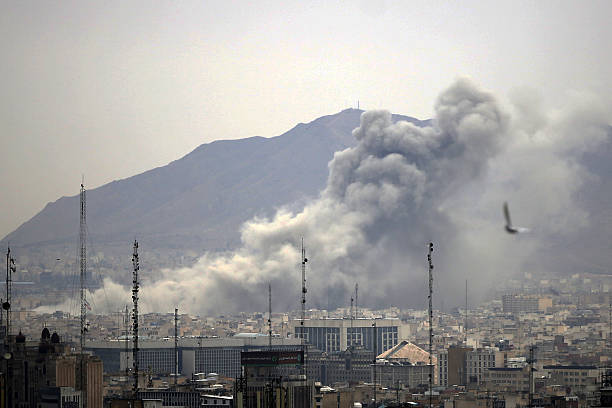
The Iran Israel war – now one month old – shows little sign of reaching a swift conclusion, with no formal ceasefire in sight, a new supreme leader in Tehran, and a US president who has simultaneously declared victory and kept missiles flying.
The Iran Israel war erupted on 28 February 2026 when the United States and Israel launched coordinated strikes on Iranian military infrastructure, nuclear sites, and senior leadership in Tehran. Within hours, Supreme Leader Ayatollah Ali Khamenei – who had led the Islamic Republic since 1989 – was killed. His son, Mojtaba Khamenei, was named his successor on 8 March, ensuring the regime survived even as its top tier was devastated. What began as a “pre-emptive” campaign has since widened into a multi-front regional conflict touching Lebanon, the Gulf, Iraq, and distant outposts in the Indian Ocean.
What the Key Players Have Said About the War’s End
Timelines offered by officials have ranged from the vague to the contradictory. White House press secretary Karoline Leavitt suggested the conflict could last up to six weeks – a threshold that has already been crossed. Israeli Prime Minister Benjamin Netanyahu stated only that the campaign “will continue as long as it is needed.” US President Donald Trump told reporters on 24 March that “this war has been won,” yet gave no concrete roadmap for how or when fighting would stop.
For its part, Iran has described the strikes as “unprovoked, illegal and illegitimate” and has continued retaliating. Iranian President Masoud Pezeshkian apologised to neighbouring Gulf states on 7 March, saying the military should not attack neighbours unless provoked – but strikes continued regardless. The contradiction between political statements and military action on both sides underscores just how difficult it is to predict how long this Iran Israel war will last.
Why the Iran Israel War Is Unlikely to End Quickly
There are multiple reasons that a quick resolution is not probable. Israel’s objectives are sweeping – complete dismantlement of Iran’s nuclear and missile programme and regime change in Tehran. These cannot be achieved in weeks.
Economically, the stakes are enormous. Energy markets around the world have been shaken by Iran threatening to block the Strait of Hormuz, through which 20% of the world’s oil traffic flows. Trump has threatened to strike Iranian energy infrastructure if the strait stays blocked, but has paused pending diplomacy that Iran denies is even happening.
The war’s geographic spread adds further complexity. Hezbollah opened a new front in Lebanon on 2 March. Iranian missiles have struck Gulf states, the West Bank, and targeted Diego Garcia in the Indian Ocean. Each new front creates more obstacles to peace.
The Mounting Human Cost and International Pressure
The toll is staggering. As of 26 March, 3,329 people have been killed inside Iran, including at least 221 children. Lebanon has recorded 1,116 deaths and over one million displaced. Thirteen US service members and at least 20 people across Gulf states have also died.
International pressure is building. Even Hamas urged Iran on 14 March to stop striking Gulf states – a rare appeal from a key ally. Turkey invoked NATO air defences after Iranian missiles crossed its airspace. Yet despite global condemnation, no formal peace mechanism exists.
Scenarios for How the Iran Israel War Could End
Analysts broadly see three possible trajectories. In the first, a negotiated pause emerges through Gulf state mediators, leading to a ceasefire that freezes rather than resolves the core disputes. In the second, one side achieves enough military dominance to impose terms – either Israel and the US further degrade Iran’s capability, or Iran makes the economic cost of war unbearable through continued Hormuz disruption. In the third – and most dangerous – the conflict expands further, drawing in additional powers and becoming far harder to contain.
The Iran Israel war has already outlasted early official predictions. Until both sides revise their maximalist objectives downward – or one suffers a decisive strategic defeat – a durable peace remains distant.
FAQs About Iran Israel War
Q: When did the Iran Israel war begin?
On 28 February 2026, with US and Israeli strikes killing Supreme Leader Khamenei.
Q: How many have been killed?
Over 3,329 in Iran, 1,116 in Lebanon, and 13 US service members as of late March 2026.
Q: What does Israel want?
Full dismantlement of Iran’s nuclear programme and regime change in Tehran.
Q: Is a ceasefire close?
No. No formal talks are underway and fighting continues across multiple fronts.
Get the Latest Updates at inkrisp.com. Also, follow our social media for updates on X and Instagram.