
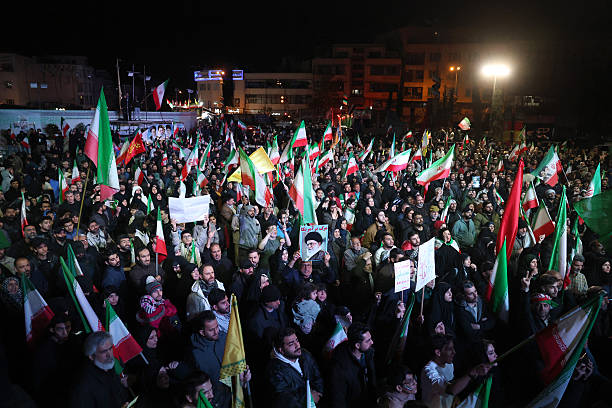
Iran US war ceasefire – announced with great fanfare just days ago – is already unraveling, as missile strikes continue, the Strait of Hormuz remains shut, and deep disagreements over the terms threaten to drag the region back into full-scale conflict. Iran, the United States, and Israel agreed Tuesday to a fragile two-week truce, a last-minute diplomatic intervention that forestalled a threatened U.S. bombing campaign. Yet within hours, drone and missile strikes were reported across Iran and Gulf Arab nations, casting immediate doubt on the deal’s durability.
The Ceasefire That Wasn’t
Iranian Parliament Speaker Mohammad Bagher Qalibaf declared the Iran US war ceasefire “unreasonable,” accusing Washington of already violating three of Tehran’s ten stated conditions for ending the conflict. Meanwhile, Israel pressed forward with devastating airstrikes on Beirut, killing at least 182 people in a single day – the deadliest toll of the latest Israel-Hezbollah war. Prime Minister Benjamin Netanyahu insisted the deal does not apply to Lebanon, directly contradicting Pakistan, the ceasefire’s broker, and other nations involved in the agreement.
The Strait of Hormuz: A Global Chokepoint
At the heart of the Iran US war standoff is the Strait of Hormuz, the narrow maritime corridor through which roughly 20% of global oil and natural gas once flowed freely. Iran closed the strait in response to continued Israeli strikes on Lebanon. Ship-tracking data shows only four vessels with active transponders passed through on Wednesday. Oil prices surged past $97 a barrel, rattling Asian markets worldwide.
Iran’s deputy foreign minister said ships will be permitted safe passage only after the United States ends what Tehran calls “aggression” in the region. France announced it is finalizing plans – with around 15 nations – to escort vessels through the waterway once fighting formally ceases. Italy’s Prime Minister Giorgia Meloni warned that any Iranian tolls on the strait would carry “unpredictable economic consequences.”
Islamabad Talks: Diplomacy’s Last Shot
With the Iran US war teetering on the edge, Pakistan has stepped forward as a pivotal mediator, hosting high-stakes negotiations in its heavily fortified capital, Islamabad. Schools and government offices have been shuttered, shipping containers block key roads, and hundreds of paramilitary forces are deployed across the city’s Red Zone.
U.S. Vice President JD Vance will lead the American negotiating team, joined by Steve Witkoff and Jared Kushner. Iran’s delegation is expected to arrive Thursday night, though Tehran has not publicly disclosed who is on the team. Iran has made clear its negotiators will push all ten points of its peace framework – including uranium enrichment rights and control over the Strait of Hormuz – positions the White House has repeatedly dismissed.
Nuclear Rights Add Another Flashpoint
The chief of Iran’s nuclear agency insisted Thursday that uranium enrichment rights are non-negotiable for any permanent resolution to the Iran US war. Mohammad Eslami called enrichment “a part of the necessary things that nobody speaks about,” directly referencing U.S. refusal to acknowledge it in the ceasefire framework.
President Trump posted on Truth Social that American warships and troops would remain in the region “until the real agreement is fully complied with,” warning of military consequences far greater than anything seen before. Even as diplomats scramble in Islamabad, the Iran US war remains defined by threats as much as negotiation.
FAQs
Q1. What triggered the Iran US war ceasefire collapse?
Israel continued strikes on Lebanon after the deal was announced, Iran shut the Strait of Hormuz in retaliation, and both sides presented contradictory versions of the agreed terms.
Q2. Why is the Strait of Hormuz critical to the Iran US war?
It handles 20% of globally traded oil and gas. Iran’s closure pushed oil above $97 per barrel and severely disrupted international shipping.
Q3. What are Iran’s key conditions for ending the Iran US war?
Iran demands the right to enrich uranium, control over the Strait of Hormuz, and broader regional security guarantees – all of which the White House has rejected.
Q4. Who is leading talks to resolve the Iran US war in Islamabad?
U.S. Vice President JD Vance leads the American team alongside Steve Witkoff and Jared Kushner. Iran has not publicly named its delegation.
Get the Latest Updates at inkrisp.com. Also, follow our social media for updates on X and Instagram.