
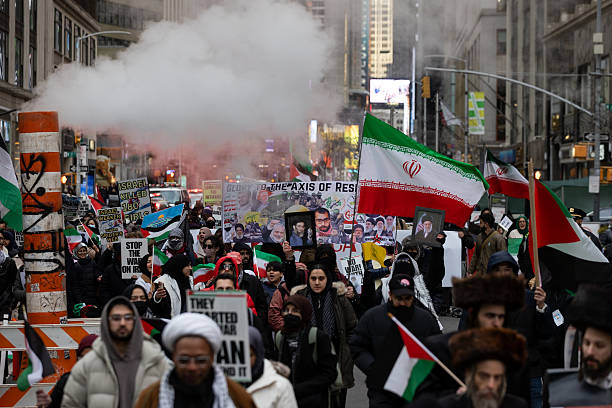
The US Iran war has reached a dramatic climax, in the wake of a sudden ceasefire declaration, but the big question remains; is the war really over or has it been merely put on hold? Weeks of intense fighting, missile exchanges, and increased international tension have now apparently calmed on the surface. But the recent developments indicate that it is much more complicated than the termination of the war.
The US Iran war started with attacks planned on Iran coupled with a powerful reaction on Iran by Tehran which attacked Israel and US-allied posts in the region. This attack and counter-attack spiral grew rapidly, attracting international attention. However, now, there is a temporary ceasefire pact which has relieved the situation, but uncertainty remains the main topic in the world news.
Ceasefire Announced, But Fighting Concerns Remain
A major turning point in the US Iran war came when a two-week ceasefire was announced following diplomatic efforts led by Pakistan. The agreement entails a suspension of US and Israeli attacks against Iran and Iran has also agreed to suspend its retaliatory attacks during this period.
Nevertheless, the situation is still unsteady. It has been reported that missile attacks were also detected in the gulf and Israel soon after the ceasefire announcement. This has raised doubts about how effectively the ceasefire is being implemented on the ground.
Adding to the tension, Lebanon has not been included in the agreement. Israeli operations in southern Lebanon are still ongoing, which means the US Iran war may not be fully contained within Iran’s borders.
Both Sides Claim Victory
Interestingly, both sides have declared success in the US Iran war. The US leadership has referred to the ceasefire as an overall victory, and that the main military objectives were met. Conversely, Iran has also asserted that it has achieved most of its goals and compelled their rivals to negotiate.
This twofold assertion of victory points to the political aspect of the struggle. Military actions can be frozen but the narrative struggle is still going on. These utterances also indicate that neither party perceives itself as a loser, this might affect subsequent negotiations.
Strategic Importance of the Strait of Hormuz
The Strait of Hormuz has been one of the most important factors in the US Iran war. It is a crucial waterway in the supply of oil in the world with almost 20 percent of the oil flowing through it.
Iran was successful in closing the strait during the conflict, which affected the global markets and raised the oil prices. Iran has signed safe passage ship coordination as part of the ceasefire deal. Shipping activity is however not very high, with the companies biding time until they are assured of security.
The success of the ceasefire will be tested by the opening of this route. When the normal shipping is restored, it can be a good indication of true de-escalation of the US-Israel war with Iran.
Role of International Mediation
The diplomatic talks have been instrumental in halting the US Iran war. Pakistan has become a central negotiator, welcoming both US and Iranian officials in Islamabad to discuss their issues. Other nations have also contributed towards curbing tensions such as China and Oman.
The ceasefire has been a good development that has been embraced by global leaders and organizations. However, they have also stressed the importance of turning this temporary pause into a long-term peace agreement.
The coming days will be very decisive with negotiations that might result in the US-Israel Iran war taking a permanent solution or back to the war.
Is the War Really Over?
Despite the ceasefire, it is too early to say that the US Iran war has ended. The situation is not stable due to a number of reasons:
- Even after the announcement of ceasefire, missile activity has not stopped.
- There are still regional conflicts, notably in Lebanon.
- Each party is on guard and ready to take the next.
- There is low trust between the parties.
The ceasefire can be considered as a temporary break and not an absolute termination. Although it is hopeful, it is not a guarantee of a permanent peace.
FAQs
1. Has the US Iran war officially ended?
No, the US Iran war is not officially over. A two-week truce has now been declared but it is merely a temporary one.
2. Why was the ceasefire agreed upon?
The ceasefire came in place to lower the tension and give time to the US and Iran to engage in diplomatic talks.
3. Is the ceasefire being followed completely?
Not entirely. Even following the declaration of ceasefire, there have been reports that missile activity is going on, which is an issue of compliance.
4. What could happen after the ceasefire ends?
In case of success in negotiations, the ceasefire can be prolonged. Otherwise, the US-Israel war with Iran may restart with further increase.
Get the Latest Updates at inkrisp.com. Also, follow our social media for updates on X and Instagram.