
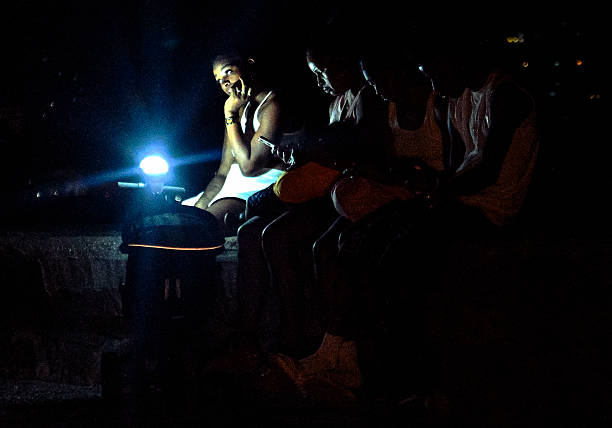
The situation in Cuba has rapidly worsened since the beginning of 2026, leaving millions of people without electricity, water and medical care. Everything from health care to waste management has been affected. To get a handle on the bigger picture, it’s important to recall three interconnected failures that have defined Cuba energy crisis: a decaying electricity sector, the effects of a decades-long U.S. economic embargo and the loss of oil imports.
The Aging Power Grid: A System Built to Break
Cuba energy crisis did not begin overnight. The electricity system in Cuba was already underperforming as of 2026, and has a history of under-investment and delayed maintenance, implying that any fuel-crisis quickly spirals into massive outage.
This weakness was brought to a scream in March 2026 when the island had gone without power nationwide, the first time since the U.S. effectively blockaded Cuba’s oil imports Service interruptions have become more frequent as power plants simply lack sufficient fuel to operate at baseline capacity. The government acknowledges the full scale of Cuba energy crisis: President Miguel Díaz-Canel confirmed that “tens of thousands” of people are waiting for surgeries that cannot be performed due to the lack of reliable electricity. Hospitals are limiting stays and operations, garbage trucks sit idle for want of fuel, and public transportation has been severely curtailed.
U.S. Sanctions and the Diplomatic Squeeze
The United States has maintained an economic embargo on Cuba since the 1960s – a policy the United Nations has repeatedly called on Washington to lift. But in early 2026, that pressure intensified sharply, directly worsening Cuba energy crisis.
In January, the U.S. cut off Cuba’s primary oil supplier, Venezuela, after capturing Venezuelan President Nicolás Maduro in a military operation and forcing its acting government to halt shipments to Havana. Weeks later, other suppliers – including Mexico – reportedly pulled back after Washington threatened them with additional tariffs, citing Cuba’s alleged alignment with “hostile countries and malign actors.”
The diplomatic pressure has not stopped at oil. Several Latin American nations have rolled back medical cooperation programs with Cuban doctors following U.S. pressure. In March 2026, Costa Rica went further, closing its embassy in Havana entirely and demanding Cuban diplomats withdraw. Secretary of State Marco Rubio stated bluntly that Cuba needs “new people in charge.” President Trump, meanwhile, has hinted at an unspecified deal while teasing that the U.S. would be “doing something with Cuba very soon.”
The Fuel Shortage: How It Turned Into a Total Energy Blockade
The combined effect of sanctions and lost supplier relationships amounts to what many analysts are calling a total energy blockade – the final blow deepening Cuba energy crisis beyond what the island can absorb. Cuba relies heavily on imported oil both to power vehicles and to generate electricity. Without it, the cascade of failures is rapid and severe.
Water distribution has been hit because pumping stations depend on the electrical grid. The government’s National Institute of Hydraulic Resources is now exploring solar panel installations to reduce dependence on the grid. Trash has been piling up on Havana’s streets for weeks. Rare public protests have broken out, including a March 7 demonstration in Havana where residents banged pots and lit bonfires, and a subsequent student protest on the steps of the University of Havana.
Human Rights Watch has warned that Cuba energy crisis – layered on top of an already fragile humanitarian situation – is now pushing essential services to their absolute limits.
FAQs: Cuba energy crisis Explained
Q: What caused Cuba’s current power crisis?
Cuba energy crisis stems from three compounding factors: an aging, under-maintained electricity grid; decades of U.S. economic sanctions; and the sudden loss of oil imports from Venezuela, Mexico, and other suppliers following U.S. pressure in early 2026.
Q: Is Cuba at risk of total collapse? The United Nations warned in February 2026 that Cuba could “collapse” due to the oil blockade. While the government is seeking remedies – including boosting domestic oil production and installing solar panels – the U.S. has shown no signs of easing the pressure that has driven Cuba energy crisis to this point.
Q: Is the U.S. open to a deal with Cuba?
Díaz-Canel confirmed in March 2026 that his government has been in talks with the United States, a rare public acknowledgment. However, the U.S. has not disclosed the specific terms it would require, and pressure on the island – and with it Cuba energy crisis – appears to be intensifying rather than easing.
Get the Latest Updates at inkrisp.com. Also, follow our social media for updates on X and Instagram.