
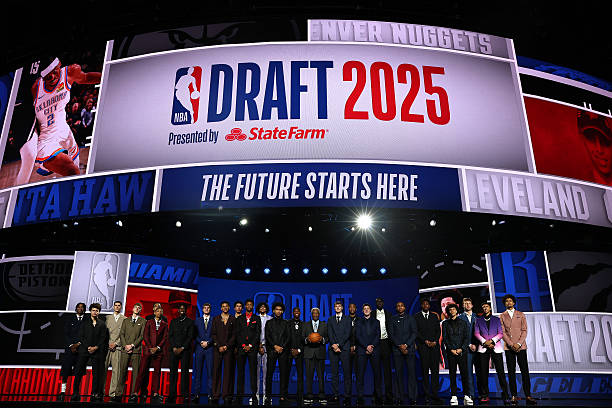
NBA Draft Lottery is one of the most anticipated events in the world of professional basketball and it gives the struggling franchises an opportunity to succeed in the future by acquiring the best talents. With teams setting themselves with the 2026 draft, it is more valuable to everyone, both fans and front office, to gain insight into the development and effectiveness of the lottery.
The NBA landscape was monumental last season, as the Phoenix Suns just completed a 32-22 season, now having a seventh-place position in the Western Conference. The 2025-26 season has highlighted the new talent and balance of power, which predetermines an interesting offseason. Such teams as Sacramento Kings or Dallas Mavericks, who are in the middle of the table, which is not at the top will be following their position in the lottery closely as the season goes on.
Understanding the NBA Draft Lottery System
Since 1985, the NBA Draft Lottery has experienced various changes. Prior to the lottery system, draft order was based on territorial selections and coin flips- a system that created speculation of teams losing deliberately to receive high picks.
The existing system, which was adopted in October 1993 employs an advanced procedure that involves fourteen ping pong balls with the number 1 to 14. These balls form four-number combinations that are randomly selected out of a lottery machine, and it does not matter in what order they are selected. There are 1,001 possible combinations (excluding 11-12-13-14, which is ignored), and each participating team receives specific combination outcomes based on their regular-season record.
Teams with worse records receive more combinations, increasing their odds of landing a top pick. The team with the worst record currently holds a 25 percent chance of obtaining the first overall pick and a 64.2 percent chance of landing in the top three. The lottery determines the first three picks, while remaining non-playoff teams are ordered by their win-loss records.
Recent NBA Draft Lottery History and Outcomes
NBA Draft Lottery has generated iconic events and franchise-altering selections in the last ten years. Notable first overall picks include Karl-Anthony Towns (2015, Minnesota Timberwolves with 25% odds), Ben Simmons (2016, Philadelphia 76ers with 25% odds), and Markelle Fultz (2017, Brooklyn Nets’ pick with 25% odds).
Interestingly, teams with the best odds have won the lottery only 20.8 percent of the time over a 24-year period—just five occasions. Third-placed teams have actually secured the first pick more frequently at 25 percent (six times), demonstrating the lottery’s inherent unpredictability. The Chicago Bulls have famously won the lottery twice, starting at the 9th-worst position (1.7% odds) in 2008 (Derrick Rose) and 2014 (Andrew Wiggins).
In 2025, all five starters of the winning Duke team, including Khaman Maluach (Fenix Sun presently) and Cooper Flagg (Dallas Mavericks), made it to the NBA Draft and contributed to the meaning of the drafts in reshaping team rosters and competitive balance.
Frequently Asked Questions
Q: How does the NBA Draft Lottery work?
A: The lottery includes four-number combinations of fourteen ping pong balls. Each non-playoff team is given a set of combinations, with more combinations given to the less successful teams, based on record.
Q: What are the odds for the worst team?
A: The worst record group stands a 25 percent chance of receiving the first overall pick and a 64.2 percent chance of receiving a top three pick.
Q: When was the current lottery system implemented?
A: The current NBA Draft Lottery system was introduced in October of 1993, as a replacement of the previous systems which either gave all non-playoff teams the same likelihood or a weighted system.
Q: Has the best-odds team always won?
A: No, teams with the highest odds of winning have won only 20.8 percent in 24 years, which confirms that lottery luck tends to support unpredictable teams.
Get theLatest Updates atinkrisp.com. Also, follow our social media for updates onX andInstagram.