
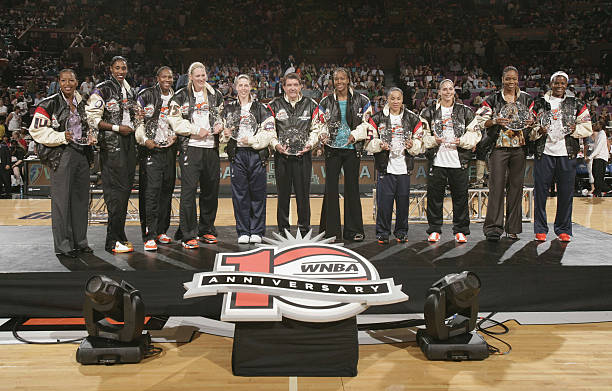
WNBA (Women National Basketball Association) has come quite far since its establishment on April 24, 1996. The league, which was to be the female version of the NBA, was formed in 1997 with eight member teams and has since become a powerhouse of professional sport among women. What began as an experimental project sponsored by the NBA has become a cultural phenomenon, and the past decade has seen unparalleled viewership, attendance, investment, and social impact.
The 2021-2023 Era: Breaking Records and Building Momentum
The 2021-2023 period was one of the crucial periods of the WNBA growth. The league stood up with remarkable power after the challenges of the COVID-19 pandemic, which pushed the 2020 season into a bubble environment. The 2023 season has broken multiple records in terms of viewership and attendance with the average viewership surging by 21% compared to 2022 on the four national televised networks. Average game attendance reached 6,615 fans per game, the highest since 2018, demonstrating renewed public interest in women’s basketball.
This era also saw significant structural changes. In 2020, the WNBA and the union of players negotiated a historic collective bargaining agreement that offered player compensation more than 50 percent higher, combined with fully paid maternity leave, and extended the rights of free agency. The league also introduced a new competition in-season, the Commissioner Cup which provided a competitive stimulus and more prize money to players.
The 2024 Explosion: The Caitlin Clark Effect
The 2024 season became a watershed moment for the WNBA, with the league experiencing what analysts called “Clarkonomics”—the dramatic impact of rookie sensation Caitlin Clark on ticket sales and viewership. The season set all-time records with more than 54 million unique viewers and an average of 1.19 million viewers per game on ESPN platforms, representing a 170% increase over 2023. Average attendance jumped 48% to 9,807 fans per game, with three games drawing over 20,000 spectators. A record-breaking 20,711 fans attended when the Indiana Fever visited the Washington Mystics on September 19, 2024, marking the highest regular-season attendance in league history.
The incoming rookie class 2024, led by Clark and Angel Reese, created a level of buzz never seen before and turned into actual business success. The sales of merchandise exploded, as the jersey of Clark was the best of sellers and the orange hoodie of the league became a cultural icon.
Expansion and Investment: Building for the Future
The WNBA financial arena changed radically in this decade. In February 2022, the league increased their capital by $75 million at a value of $475 million. More significantly, expansion became a priority. After remaining at 12 teams for 15 seasons, the league approved the Golden State Valkyries as its 13th franchise in 2023, with a reported $50 million expansion fee. Toronto and Portland franchises were announced for 2026, followed by Cleveland (2028), Detroit (2029), and Philadelphia (2030), bringing the total to 18 teams.
In July 2024, the WNBA negotiated a new media rights deal valued at $200 million annually over 11 years, more than triple the previous agreement, covering partnerships with ESPN/ABC, NBC/USA Network, and Amazon Prime Video starting in 2026.
FAQs
Q: How many teams will the WNBA have by 2030?
A: The league is also planned to make 18 teams by 2030, and the current 15 teams will be supplemented by new franchises in Toronto, Portland, Cleveland, Detroit, and Philadelphia.
Q: What was the WNBA’s viewership in 2024?
A: The 2024 regular season reached 1.19 million average viewers per game across ESPN platforms, and more than 54 million unique viewers across the season–both all-time highs.
Q: How has WNBA player compensation changed?
A: The 2020 collective bargaining agreement raised base player payment by more than 50%, with minimum pay hiking to $57,000 and maximum pay of $215,000 to qualifying players.
The previous 10 years have seen the WNBA become not a struggling league, but an effective business with cultural appeal and validating investment in women’s sports as a valuable payoff.
Get the Latest Updates at inkrisp.com. Also, follow our social media for updates on X and Instagram.