
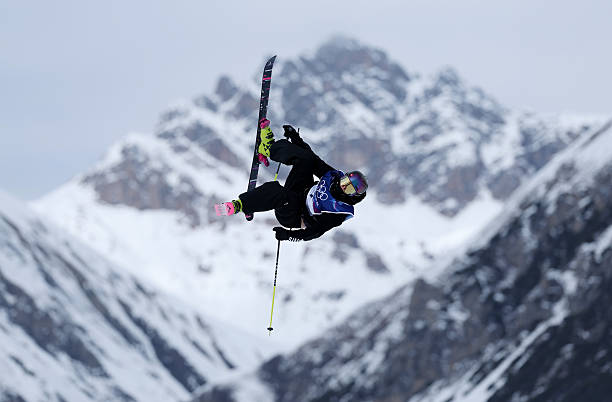
With the Winter Olympics Games Milano Cortina 2026 underway in the breathtaking venues in Italy, we are once again reminded of the reason the winter Olympics evoke the hearts of millions all around the world. Starting with the Opening Ceremony held in Milan on February 6 to the exciting events in ice and snow, the Games this year are a continuation of a long history of memorable sporting moments. With the present edition, it is high time to consider the tremendous success and theatrical victories that have marked decades of Winter Olympics history.
A Look at the Best Moments in Winter Olympics History
The Miracle on Ice and American Dominance
The Winter Olympics have consistently delivered moments that transcend sport. At Lake Placid 1980, the underdog U.S. men’s ice hockey team pulled off the “Miracle on Ice,” defeating the seemingly invincible Soviet Union 4-3. This group of amateur collegiate players stunned all the experts; they captured the hearts of the world.
The same Games saw the dominant power of skating by Eric Heiden. The 21-year-old American took a clean sweep of all the five men’s events, the first and only athlete to win five separate gold medals in a single winter Olympics.
Artistic Excellence and Technical Brilliance
In Sarajevo 1984 British ice dancers Jayne Torvill and Christopher Dean revolutionized their sport by interpreting Ravel Bolero, and garnering twelve 6.0s each, a performance that continues to be the standard of Olympic ice dancing.
The winter Olympic are still driven by technical innovation. At Beijing 2022 Japan’s Hirano Ayumu became the first-ever triple cork 1440 competitor, and the first female freestyle skier to win three events at the same Games. In 2018 at PyeongChang, Czech athlete Ester Ledecka amazed the world by being the victor in both snowboarding and alpine skiing at the same Winter Olympics.
Resilience and Redemption Stories
Winter Olympics have also glorified great persistence and perseverance. This spirit is best illustrated by the story of Hermann Maier at Nagano 1998–the Austrian survived a horrible crash at more than 120 km/h in the downhill, only to return days later to take on gold in the super-G and giant slalom, becoming known as the “Herminator”.
More recently, Lindsey Jacobellis was redeemed at Beijing 2022 as she eventually became a snowboard cross gold medalist, 16 years after her notorious celebration-gone-wrong at Turin 2006. She was 36 and became the oldest American female to ever win Winter Olympics gold, which is evidence that perseverance can pay off.
Breaking Barriers and Inspiring Change
The Winter Olympics have bursted the barriers and widened horizons as well. Vonetta Flowers set history with this Olympics at Salt Lake City 2002 when she was the first Black athlete to win Olympics gold, in the bobsleigh in the women’s category. Nigeria bobsleigh and skeleton teams at PyeongChang 2018 were the first African athletes to compete at the Winter Olympics, becoming role models to a new generation of Africans. These breakthroughs show that the Games keep developing and welcoming diversity to the largest winter sports event in the world.
FAQs
1. What is the most famous moment in Winter Olympics history?
A. The most iconic Winter Olympics moment is commonly held to be “the Miracle on Ice” at Lake Placid 1980, when the U.S. hockey team emerged victorious over the Soviet Union.
2. Who has won the most medals?
A. Norwegian Marit Bjorg has the highest number of medals (15) (eight gold, four silver, three bronze) in five Games in cross-country skiing.
3. When did the first Winter Olympics take place?
A. The first Winter Olympics were held in Chamonix, France, in 1924, though the article highlights moments from 1928 onwards.Get the Latest Updates at inkrisp.com. Also, follow our social media for updates on X and Instagram.