
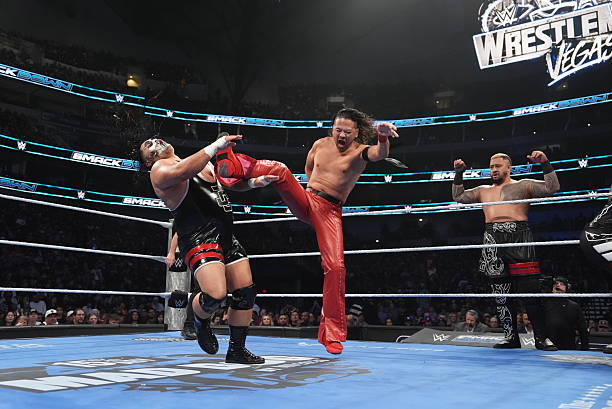
Professional wrestling has become a multi-billion-dollar entertainment giant that was once a touring circuit of regional promotions that played in smoky bingo halls and small arenas. It is now regarded as one of the most commercially dominant live entertainment properties in the world, with billion-dollar media deals, sold-out stadiums, and Wall Street valuations that would have been considered inconceivable just a generation ago. However, this change did not occur immediately, there was a vision and aggression, and something resembling the ruthless business sense that is enacted within the ring.
Professional Wrestling: Big Money, Big Moments
From Regional Territories to a National Takeover
For most of the 20th century, professional wrestling was governed by a gentleman’s agreement called the territory system in which regional promoters billed the country and pledged against stealing each other or their markets. All that changed in the 1980s when Vincent Kennedy McMahon acquired the World Wrestling Federation (WWF) that his father had owned and in the same breath threw away the rulebook.
The strategy adopted by McMahon was bold and controversial: he stealed talent in rival territories, landed national television, and did massive events such as the first WrestleMania in 1985, in Madison Square Garden, on closed-circuit television and bringing in mainstream money, so that wrestling could fill mainstream arenas and raise mainstream revenues. He did not merely expand promotion; he created an industry. Through celebrity alliances, syndicated television and vigorous merchandising, McMahon transformed the WWF into a household name and he killed the territory business in the process.
The 1990s saw the “Monday Night Wars”, a ratings contest between WWF and WCW (run by Ted Turner) which challenged both companies to creativity and commercial extents, attracting the highest TV ratings in history. McMahon eventually out-lived his competitor, buying WCW in 2001 and firmly establishing WWE as a worldwide leader in professional wrestling.
The Attitude Era to the Streaming Era
The “Attitude Era” of the late 1990s, which featured anti-heroes, such as Stone Cold Steve Austin and The Rock, helped WWE to its highest cultural resting point, attracting huge viewing figures and selling merchandise. McMahon was a visionary, able to read pop culture and re-brand the product to make professional wrestling pertinent in decades of changing entertainment environments.
This flexibility is perhaps most demonstrated by a historic agreement with Netflix that WWE made in January 2024, 10 years and worth more than $5 billion, shifting WWE flagship series Raw to the largest streaming platform in the world. It was the first time that Netflix provided regular scheduled live sports programming and indicated how far the industry had come since its regional origins.
The TKO Era: Wrestling Goes Wall Street
The biggest business shock in the history of professional wrestling came in September 2023, with WWE combining with UFC to create TKO Group Holdings (NYSE: TKO), a publicly traded company majority-owned by Endeavor. The acquisition was worth about $9.3 billion. In 2024, TKO registered a total revenue of record-breaking $2.8 billion with WWE registered at $1.398 billion shares, as per financial statements of TKO.
McMahon, founder of WWE and former CEO of a regional company into a global juggernaut, stepped down as a board member in January 2024 amidst a pair of major legal scandals, having already cashed in over $1.2 billion of TKO stock sales. WWE is still expanding under a new leader, Ari Emanuel and under the creative vision of Triple H, with WWE revenue up 23 percent year-over-year in 2025 with a forecast of income of $402.1 million in Q3 2025.
FAQs
Q. Is professional wrestling a real sport?
A. Professional wrestling is categorized as “sports entertainment”. The results are predefined, yet the physical aspect, bumps, falls, high-flying moves, is real and poses a real threat of injuries.
Q. How much money does WWE make?
A. In 2024, WWE had a record annual revenue of $1.398 billion as a component of TKO Group Holdings total revenue of $2.8 billion in WWE and UFC.
Q. What is TKO Group Holdings?
A. TKO is the publicly traded parent company established in 2023 through the merger of WWE and UFC. Endeavor is the majority-owner and listed on the NYSE with the ticker symbol TKO.
Q. Where can fans watch WWE today?
A. Raw is now available on Netflix across the globe, and SmackDown is on USA Network. Premium Live Events may be accessed by different broadcast partners all over the world.
Get the Latest Updates at inkrisp.com. Also, follow our social media for updates on X and Instagram.